
In Timor-Leste, where rabies first emerged less than three years ago, dog bite cases previously recorded on paper are now being captured in the national digital surveillance system, giving health authorities a clearer, timelier picture of the threat.
This shift has been driven by a pivotal refresher training programme organised by the Ministry of Health, with WHO support. Between August and October 2026, 174 health workers from all 14 municipalities were trained in digital dog bite reporting. By 3 November, the national surveillance system held 3,914 individual bite records, more than five times the pre-training figure.
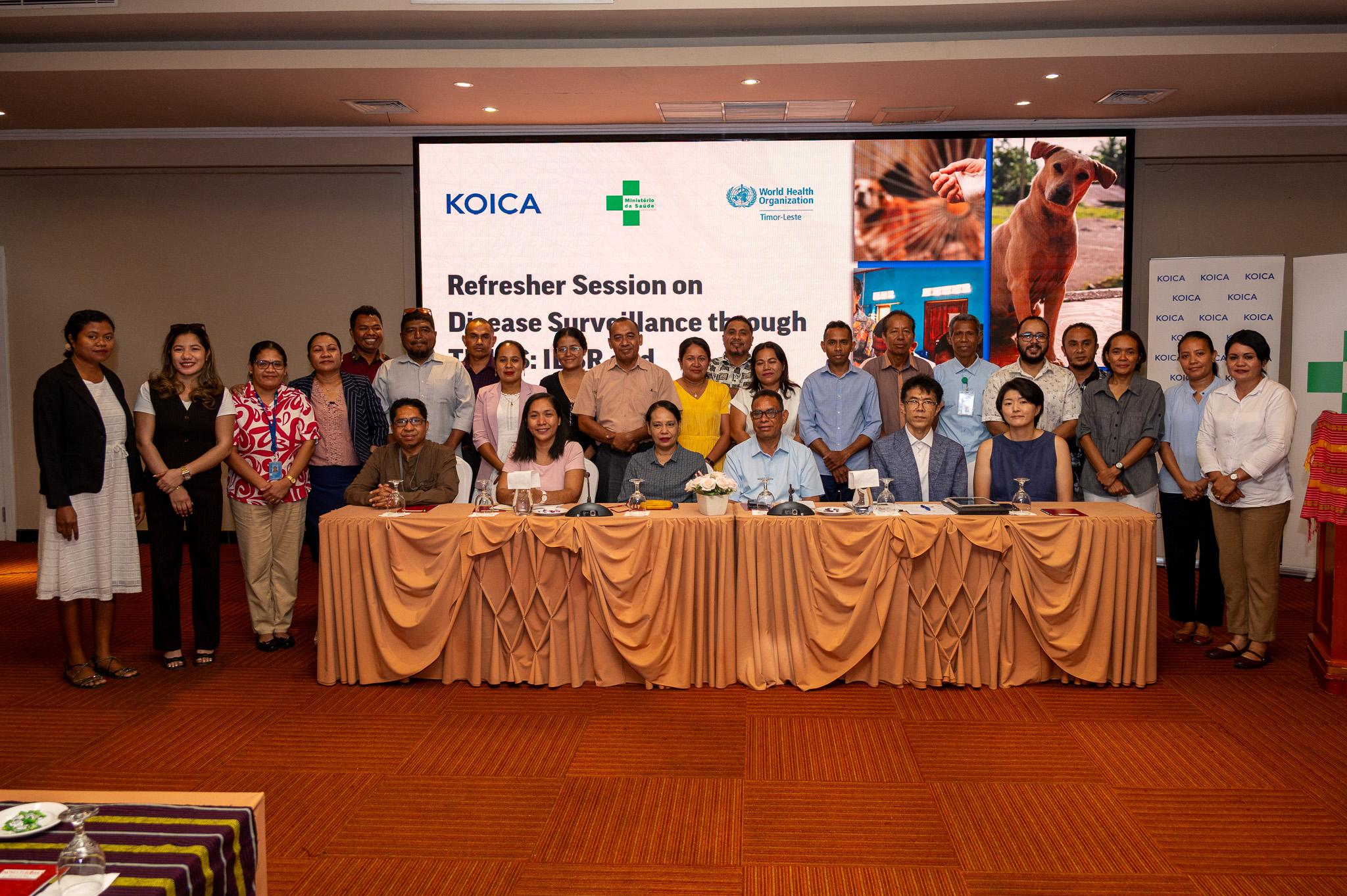
Health professionals and partners unite to advance digital disease surveillance and protect communities across Timor-Leste. ©WHO Timor-Leste
“Until recently, dog bite cases recorded at health centres could take much longer to reach health authorities. This training is helping frontline health workers bring these cases into the national digital system promptly, making them easier to track and follow up.”
— Dr Arvind Mathur, WHO Representative to Timor-Leste
Held in Dili, the training brought together 101 surveillance and health information focal points and 73 heads of community health centres, prioritising municipalities with high dog bite numbers but low reporting rates.
First case to public health emergency
Rabies is a recent arrival in the country, with its first human case confirmed in March 2024 in Oecusse. As the disease spread to other municipalities, the Government declared a national public health emergency in June 2025 and set up a National Task Force on Rabies to coordinate the human and animal health response.
WHO has worked with the Ministry of Health, the Ministry of Agriculture, Livestock, Fishery and Forestry, and several partners to develop the National Strategic Plan for Rabies Elimination, setting out the country’s Road to Zero, with stronger surveillance as a key priority.

Participants use digital tools during a hands-on exercise to strengthen disease surveillance and data management through TLHIS. ©WHO Timor-Leste
In the second half of 2025, a dog bite reporting module was introduced within the Integrated Case-Based Surveillance system (ICBS-TL) on the national health information platform (TL-HIS). Health facilities were asked to report individual dog bite cases within 24 hours.
However, many health workers continued recording cases in paper registers or Excel spreadsheets, largely because they had not received structured training on the new platform. By late August 2026, only 711 dog bite cases had been entered into ICBS-TL, despite many more patients having sought care.
Training translates to better reporting
To bridge this gap, the Ministry of Health, with WHO support, organised four training batches following a request from Vice Minister of Health, José dos Reis Magno, during a steering committee meeting of the Korea International Cooperation Agency (KOICA)-funded project on Strengthening Preparedness and Response to Infectious Diseases in Timor-Leste.
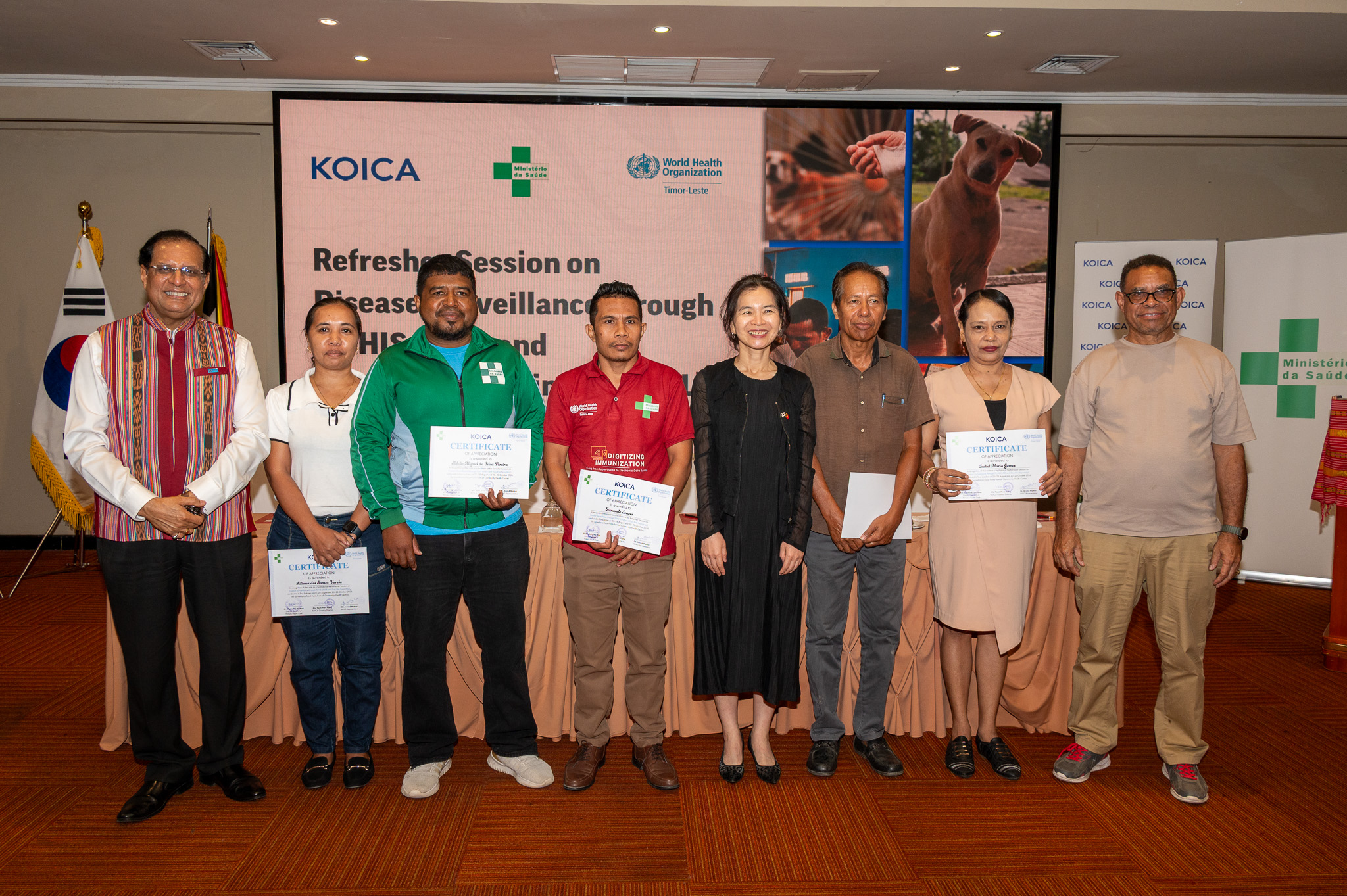
Participants celebrate the successful completion of the refresher session on disease surveillance and digitalization. ©WHO Timor-Leste
In an interconnected regional community, your role on the front lines of health surveillance is crucial to safeguarding both your nation and the wider region. A resilient health system relies above all on the dedication, vigilance, and leadership of health professionals like you.”
— Ms Youn Hwa Kang, KOICA Country Director, addressing the participants
Participants reviewed Integrated Disease Surveillance and Response reporting requirements and learned to classify dog bite exposures and suspected rabies cases. During hands-on sessions, health workers also began digitising cases previously recorded on paper. Health centre heads attended a briefing to strengthen supervision and timely reporting.
“In the past, we had to manually enter data into registry books. Whenever we needed to find specific information, we had to spend a lot of time searching through numerous documents. The digital system has reduced the need for manual data searches, improved our ability to monitor information, and helped us work more efficiently.”
— Joela Fernandes, surveillance officer, Venilale, Baucau
Participants’ knowledge also improved markedly. Average test scores rose from 68% to 93% in the first round and from 77% to 94% in the second, with the greatest improvement in rabies case classification.
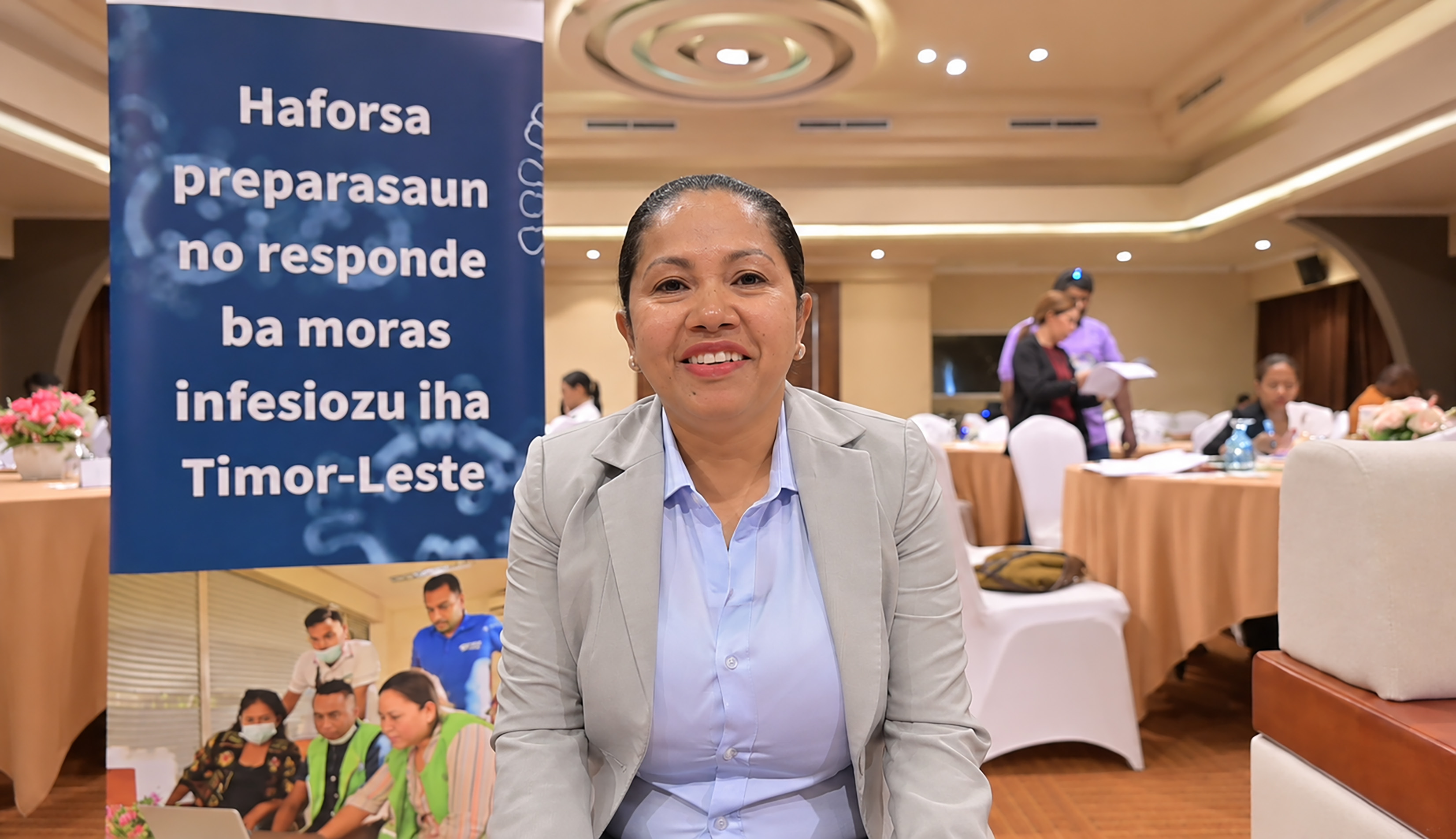
Joela Fernandes, Surveillance Officer from Venilale, Baucau. ©WHO Timor-Leste
“Better reporting helps authorities identify areas at risk, plan supplies of rabies vaccines and immunoglobulin, and ensure patients complete their vaccination course. This is critical to Timor-Leste’s fight against rabies,” Dr Mathur added.
WHO and the Ministry of Health will continue supporting health facilities through follow-up visits, joint data quality monitoring and improved guidance on tracking subsequent vaccine doses. For rabies, timely reporting and swift action are essential. Once symptoms appear, the disease is almost always fatal, but prompt and appropriate post-exposure prophylaxis can prevent it.
Key facts
- Dog bite records in ICBS-TL rose from 711 before the training to 3,914 on 3 November 2026.
- 174 participants from all 14 municipalities (101 surveillance and health information focal points, 73 heads of community health centres).
- 4 training batches in Dili: 25–28 August and 20–23 October 2026.
- Average knowledge scores rose from 68% to 93% (Round 1) and from 77% to 94% (Round 2).