
High-threat pathogens (HTPs) such as Nipah virus, zoonotic influenza, and cholera — continue to pose significant risks across the WHO South-East Asia Region (SEAR). These diseases are characterized by epidemic or pandemic potential, high severity, limited countermeasures, and complex One Health dimensions involving humans, animals, and the environment.
SEAR has experienced repeated Nipah outbreaks with high case fatality rates, remains vulnerable to avian influenza spillover events, and continues to face recurrent cholera outbreaks, particularly in settings affected by climate-related disasters and fragile water and sanitation systems.
Recognizing persistent gaps in preparedness, the WHO South-East Asia Regional Office’s Pandemic and Epidemic Management (PEM) Unit has, over the past three years, developed a set of interconnected tools, strategies, and platforms to strengthen regional readiness for high-threat pathogens.
Key achievements
- HTP Prioritization Methodology
A structured, evidence-based process was developed to help countries identify and rank priority pathogens based on epidemic potential, severity, transmissibility, and preparedness capacity. The methodology was piloted in Bangladesh in 2025 (Access the link here).
- Zoonotic Influenza Distribution Assessment and Ranking (ZIDAR)
A geospatial surveillance framework was developed in Nepal to identify areas at highest risk for zoonotic influenza spillover by integrating wildlife, poultry, swine, and human exposure data (Access link here).
- Unity Studies Network — South-East Asia Chapter
A regional platform for standardized outbreak investigation protocols was established across five countries and six sites, strengthening the Region’s ability to rapidly generate epidemiological evidence during outbreaks (Access link here).
- Regional Nipah Strategy 2023–2030
The Region adopted its first comprehensive multi-year strategy for Nipah virus, covering prevention, detection, response, and recovery through a One Health approach. The strategy also provides a model for future HTP strategies (Access link here).
A Regional Approach to High-Threat Pathogen Preparedness
These initiatives are being brought together into a comprehensive regional preparedness approach designed to strengthen readiness for high-threat pathogens across the South-East Asia Region. The approach focuses on improving how countries identify emerging threats, understand and monitor risks, strengthen preparedness systems and coordination, and enhance response capacity. Together, these efforts support a more integrated, evidence-driven, and sustainable model for regional health security.
Three pathogens as regional test cases
Nipah virus, zoonotic influenza, and cholera have been used as priority examples to guide the development and application of the SEAR’s preparedness efforts. These pathogens reflect different modes of transmission, risk patterns, and operational challenges, allowing the SEAR to test and strengthen approaches that can ultimately be adapted for a wider range of existing and emerging health threats.
Looking ahead
The next phase of the PEM Unit’s work will focus on scaling and integrating these tools across Member States to create a sustainable, region-wide preparedness system for all high-threat pathogens, including future “Disease X” scenarios.
Future priorities include expanding pathogen prioritization exercises, strengthening One Health risk assessments, developing regional strategies for additional pathogens, establishing coordination platforms for transboundary threats, and building specialized surge and research capacity.
Together, these efforts mark a shift from reactive, disease-specific responses toward a systematic and evidence-driven regional health security architecture — one designed to help countries identify emerging threats earlier, understand risks better, and respond faster and more effectively when outbreaks occur.
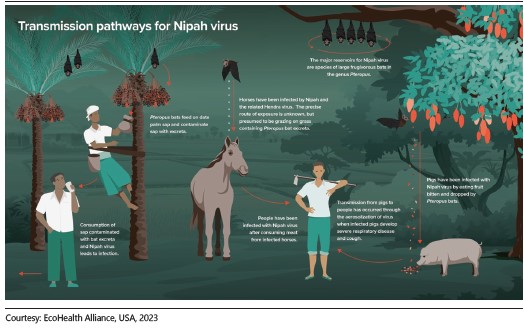
Transmission pathways illustrated in the Regional Nipah Prevention and Control Strategy (2025–2030) guide disease prevention and control efforts in the South-East Asia Region. (Photo credit-Eco Health Alliance, USA)