
Effective preparedness for high-threat pathogens demands more than technical tools — it requires a coherent strategy, sustained country engagement, and the institutional infrastructure to translate evidence into action. In 2025, the Pandemic and Epidemic Management (PEM) Unit advanced all three, working across the full spectrum of high threat pathogen (HTP) preparedness: from methodology development and evidence generation to country-level technical support, emergency response, and regional workforce strengthening.
At the core of the PEM unit's work is building the regional evidence and policy architecture needed to prioritize and respond to HTPs systematically. A major milestone was the development of the HTP Prioritization Methodology — a structured, multi-criteria approach to ranking pathogens by epidemic potential, severity, and national context — and its national pilot in Bangladesh, where SARS-CoV-2, Nipah, dengue, and cholera emerged as the highest-priority threats, informing the PEM unit's contribution to 2026–27 biennium prioritization and workplan development (Access link here).
Underpinning this work, the PEM unit advanced the peer-reviewed evidence base for HTP preparedness in the South-East Asia Region (SEAR), with three publications in international journals in 2025: Development of a zoonotic influenza distribution assessment and ranking system (ZIDAR): Technical application in Nepal to support cross-sectoral risk-based surveillance in One Health; Implications for influenza A virus surveillance in Southeast Asian Region countries: a scoping review of approaches for the surveillance of swine influenza viruses at human-swine interfaces in BMJ Public Health; and Operationalizing multisector partnerships: a Theory of Action and Reflection tool for zoonotic influenzas in Health Policy and Planning. Together, these contributions move the Region’s HTP preparedness agenda from practice to science — generating the transferable methodological foundations that will inform evidence-based capacity strengthening in Member States.
Country-level engagement in 2025 reflected the breadth of contexts in which HTP preparedness must function. Technical support was provided for Mpox and cholera events across the Region, including coordination of cholera and acute watery diarrhea prevention and control in Myanmar in the wake of the March 2025 earthquake. In Myanmar, the PEM unit contributed technical leadership to the earthquake emergency response — one of the most complex humanitarian emergencies in the SEAR — as Health Operations and Technical Support lead within the Incident Management Support Team. This included strengthening emergency response planning, supporting operational and after-action reviews, and providing monitoring and evaluation support for both acute and protracted crisis response. The breadth of HTP support provided to emergency operations across the SEAR was documented in the PEM unit’s contribution to the regional report for the Health Security Interface Technical Advisory Group.
In Sri Lanka, technical collaboration with the WHO Country Office and the Ministry of Health laid the groundwork for the National Steering Committee's 2026 annual meeting, development of Standard Operating Procedures for specialized emergency response, and a national training programme — all structured around evidence-based risk assessment for specialized hazards including HTPs.
Across the SEAR, the unit contributed to strengthening the workforce architecture that underpins HTP response. Technical inputs shaped the WHO South-East Asia Regional Health Emergency Workforce Strategy 2025–2030, and the PEM unit supported conceptual development of the health emergency workforce framework for the Pandemic Fund Round 3 proposal.
Alongside this, the unit's sustained engagement on the meningitis agenda culminated in the launch of the Regional Implementation Framework to Defeat Meningitis in South-East Asia by 2030 at the Seventy-eighth Session of the Regional Committee, ensuring the Region's priorities were reflected in the Global Technical Task Force and expanding the unit's HTP engagement beyond outbreak-prone zoonotic pathogens (Regional Implementation Framework to Defeat Meningitis in South-East Asia by 2030).
Taken together, 2025 demonstrated that meaningful HTP preparedness is built incrementally — through methodology, engagement, and the steady accumulation of institutional capacity across Member States.
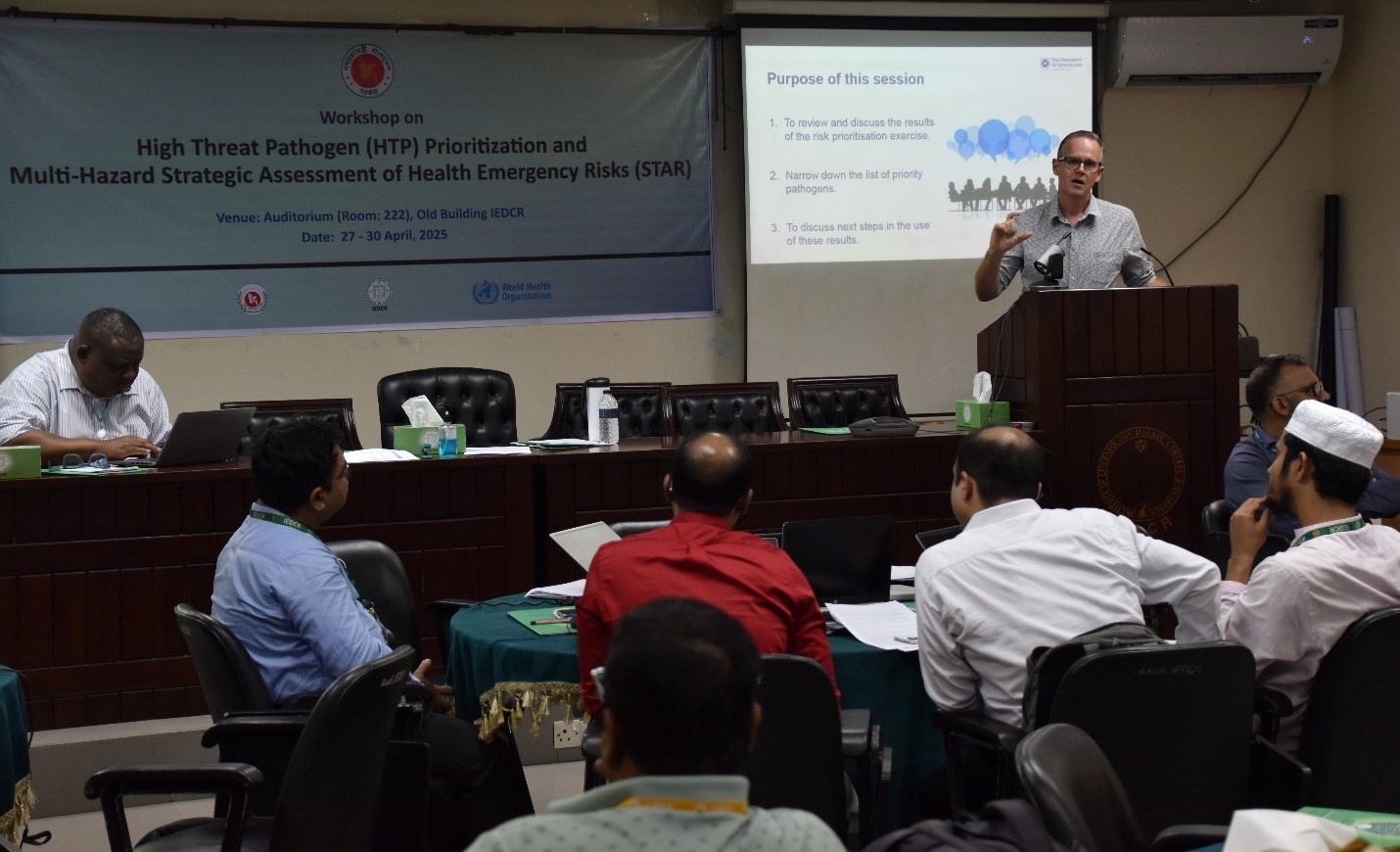
Bangladesh piloted the HTP Prioritization Methodology and identified the highest-priority pathogens in the country context (Photo credit: WHO Country Office, Bangladesh).