In a show of regional solidarity, countries and areas across the World Health Organization (WHO) Western Pacific Region concluded IHR Exercise Crystal - an annual simulation exercise that tests how countries communicate about public health emergencies under the International Health Regulations (2005), or IHR.
Held on 23 and 24 September 2026, this year’s exercise was built around a simulated cross-border food safety emergency in the poultry supply chain, triggering a human health and food safety response under IHR and the International Food Safety Authorities Network (INFOSAN). National IHR Focal Points joined the exercise side by side with INFOSAN Emergency Contact Points, testing how well the two networks can coordinate a food safety response together.
The exercise also illustrates how the Western Pacific Region is implementing commitments Member States made at the seventy-sixth session of the WHO Regional Committee for the Western Pacific in October 2025, when the Region became the first in the world to endorse a plan to implement amendments to the IHR. That plan committed countries to strengthen multisectoral coordination to implement the IHR and identify priority measures to improve collective regional readiness for future public health emergencies - commitments that exercises such as IHR Exercise Crystal put directly into practice.
Keeping systems ready
Since 2008, IHR Exercise Crystal has been conducted annually in the Western Pacific Region, using scenarios ranging from novel respiratory illnesses to radiological events and emerging arboviruses. Simulation exercises give focal points a safe space to practice the notification, verification and coordination steps they would need to take during an actual public health emergency - testing systems, plans and relationships before, rather than during, a crisis.
 Photo: A multisectoral team from Malaysia participates in the regional simulation IHR Exercise Crystal 2026. Credit: Ministry of Health Malaysia
Reiterating the critical role that regular simulation exercises play in regional emergency readiness, Dr Gina Samaan, WHO Regional Emergency Director for the Western Pacific, noted: “Testing and keeping systems emergency-ready not only saves lives, but also mitigates socioeconomic impact. Exercises like Crystal are how we keep that investment in readiness robust - testing our cross-border coordination, stress-testing how fast information really moves, and finding gaps in the system while the stakes are still zero.”
Simulation exercises like IHR Exercise Crystal are a key tool used in the Region to test cross-border workforce coordination, streamline rapid information-sharing and identify operational bottlenecks before a real crisis strikes. This year’s exercise also builds on a food safety emergency simulation held with the Association of Southeast Asian Nations (ASEAN) in Jakarta, Indonesia, in July 2026, in which all 11 ASEAN Member States rehearsed a coordinated response to a simulated cross-border food contamination event. IHR Exercise Crystal 2026 extends that same test of readiness to the entire Western Pacific Region.
Speaking on behalf of one of the participating countries, Dr Azjargal Batjargal, National IHR Focal Point, Ministry of Health shared: "Mongolia is currently updating its national procedure for information exchange with INFOSAN, to ensure that our risk assessment guidance and the criteria for deciding when information should be shared with other countries is clear to all. This exercise was therefore very timely and useful for us."
Connecting emergency leaders
IHR Exercise Crystal also advances WHO’s goals under the Global Health Emergency Corps (GHEC) initiative to build a connected, interoperable health emergency workforce across countries. By bringing together National IHR Focal Points and INFOSAN Emergency Contact Points, the exercise connects emergency leaders who will need to work side by side during a real multi-hazard event, whether that involves a novel pathogen, a chemical incident or a contaminated food product.
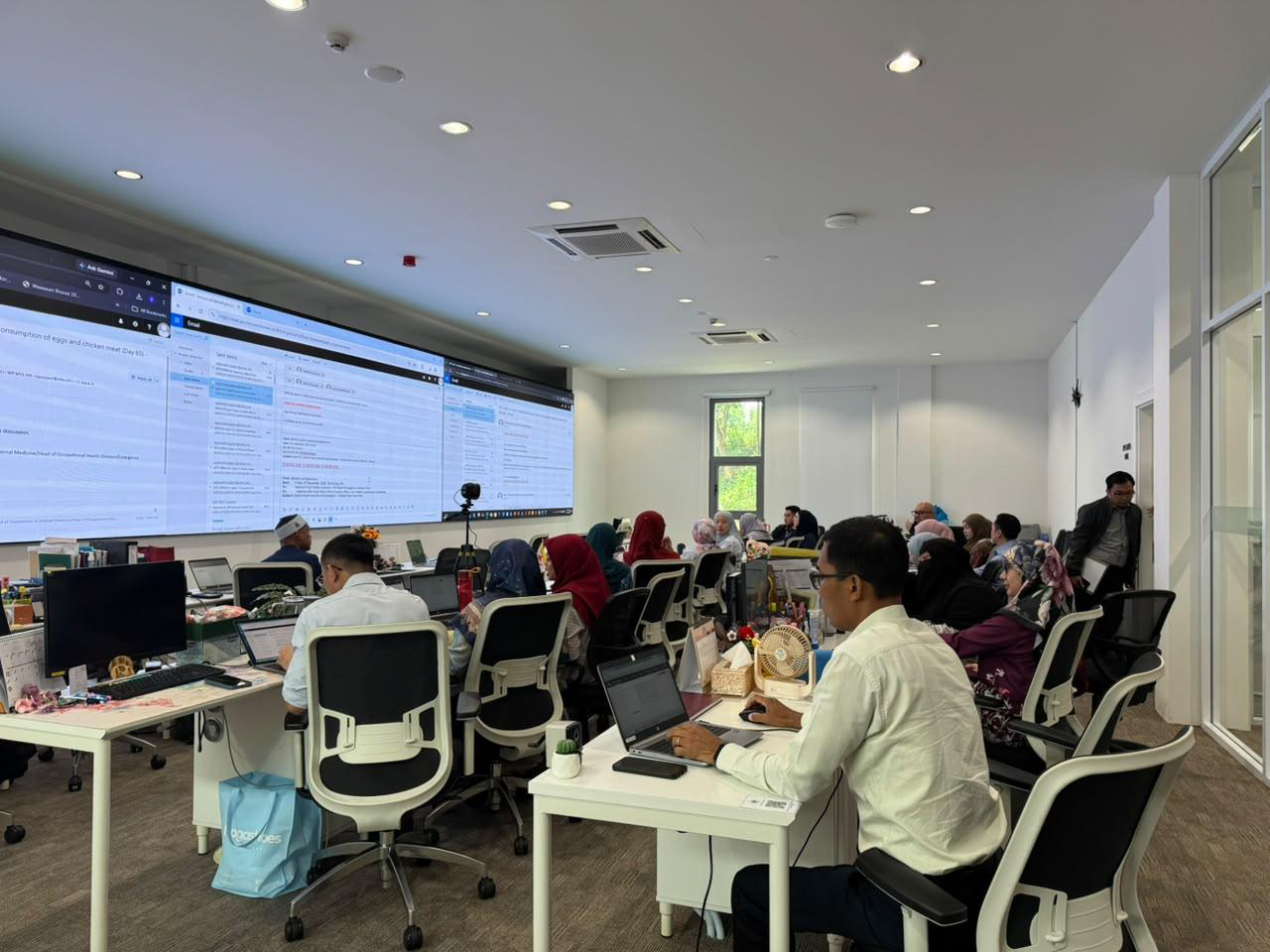 Photo: A multisectoral team from Brunei Darussalam participates in the regional simulation IHR Exercise Crystal 2026. Credit: Ministry of Health Brunei Darussalam
“By connecting emergency leaders across human health and food safety systems, and making joint simulation exercises a standing part of how we prepare, the Region is taking proactive steps to make sure that when lives are on the line, leaders know who to call and systems know how to work as one,” said Ms Qiu Yi Khut, Programme Area Manager, IHR and Health Security Policy, WHO Regional Office for the Western Pacific.
Recommendations from this year’s exercise will help countries and areas further strengthen the capacities of their National IHR Focal Points and INFOSAN Emergency Contact Points, building on the Region’s efforts under the Asia Pacific Health Security Action Framework to prevent outbreaks and public health incidents from escalating into wider emergencies.
________________________
For more information, or to arrange media interviews, contact:
WHO Regional Office for the Western Pacific: wprocom@who.int